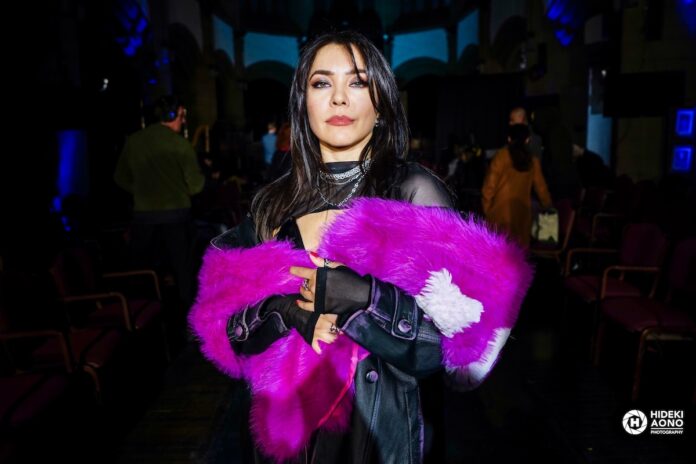
From Art Basel Miami to curated live painting moments and cross-disciplinary cultural platforms, Margarita Howis has emerged as a distinct voice working at the intersection of fine art and contemporary culture. Recently honored with the Rising Star Award by ArtEstate Magazine, Howis represents a generation of artists rethinking how painting circulates — not only within galleries, but across public, social, and cultural spaces.
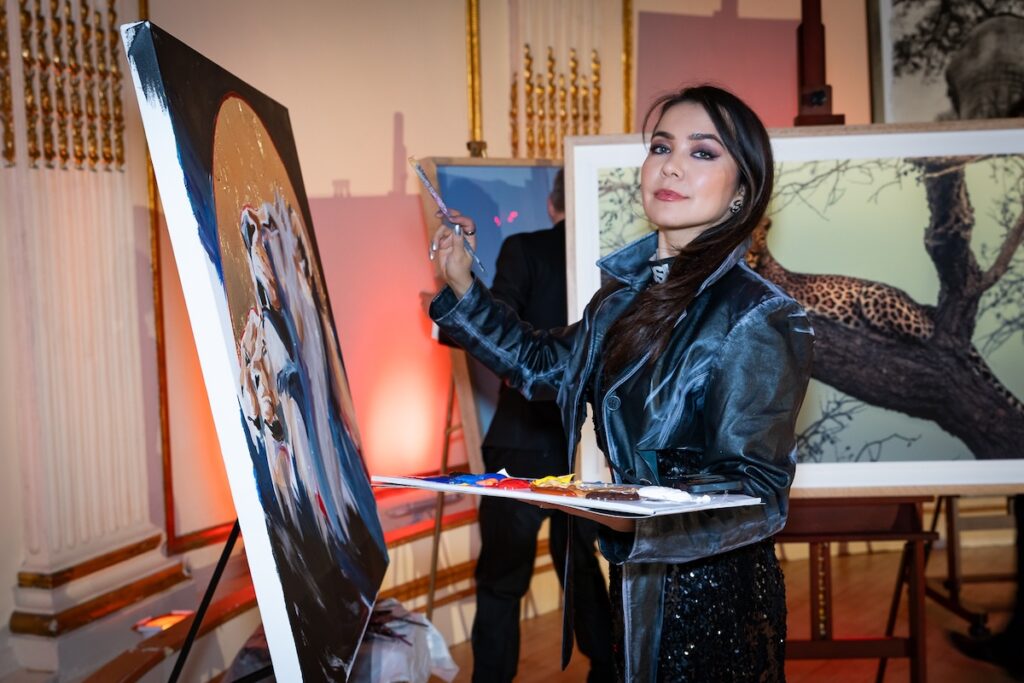
A Russian-born, internationally exhibited artist with a background in architecture, Howis has lived across seven countries — from Europe to China — and is currently based between New York, Copenhagen, and Miami. Her collectors include musicians Jason Derulo, Offset, and Lil Yachty, and she has spoken at the United Nations Headquarters in Geneva. Her work has been featured by TMZ, UP Magazine, and Al-Tiba9 Contemporary Art.
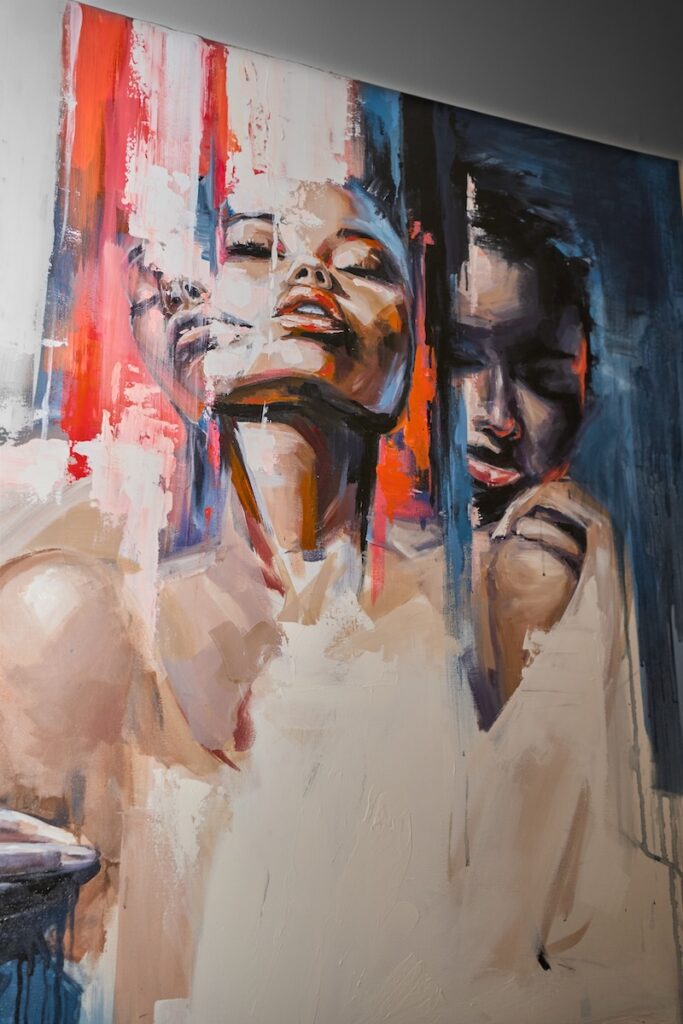
Known for emotionally charged portraiture shaped by her time between cities and cultures, Howis approaches visibility with intention rather than spectacle. Her work explores identity, presence, and becoming — and how those forces shift depending on context. We sat down with her to talk about recognition, Art Basel Miami, and how she thinks about authorship in an increasingly visible art world.

You were recently awarded the Rising Star Award by ArtEstate Magazine. What does this recognition represent for you at this point?
The Rising Star Award resonated with me because it wasn’t about a single moment or a single project — it acknowledged trajectory.
The award was presented during the ART E$TATE Awards at Unique Fashion Show New York, a platform that brings together art, fashion, technology, and social impact within a strong ethical and cultural framework. Being recognized in that context affirmed something important for me: that it’s possible to build a serious, long-term painting practice while still engaging with broader cultural systems in a thoughtful way.
I see it as encouragement to continue working with clarity and restraint — staying rooted in painting, while allowing the work to circulate where meaningful dialogue is happening. It wasn’t about a single moment, but about direction. The award is a reminder to me that the journey of becoming is just as powerful as the arrival, and I am grateful for being recognised for it.
Miami has been a significant stage for you, especially during Art Basel. What did that week represent for your work?
Art Basel Miami places art in direct contact with social, cultural, and emotional energy all at once. It’s not a quiet environment — and I actually find that very revealing.
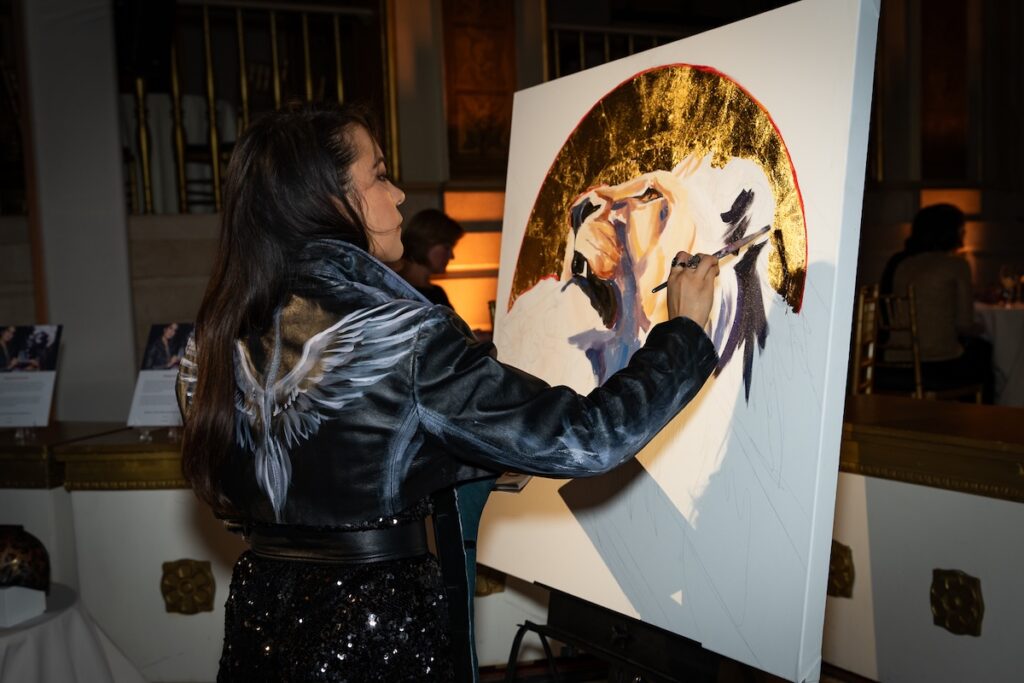
This year, I participated in Red Dot Art Fair, took part in curated Art Week events and group exhibitions such as The Gilded Affair at The Moore with Amarna Gallery, hosted a collectors’ dinner at La Cabrera, and was invited as a guest artist during residency weekend at Playa Miami, where I painted live within fashion- and music-driven settings. During New Year’s Eve, I was invited to paint Carmit Bachar — founding member of the Grammy-nominated The Pussycat Dolls — live at The Moore.
Those experiences allowed the work to exist in motion rather than isolation. Miami understands intensity, but it also understands feeling. It’s a place where art doesn’t have to retreat inward — it can stand its ground and still remain emotionally legible.
You often bring painting into fashion, live, and social environments. Why is working in these contexts important to you?
Because that’s where people already are.
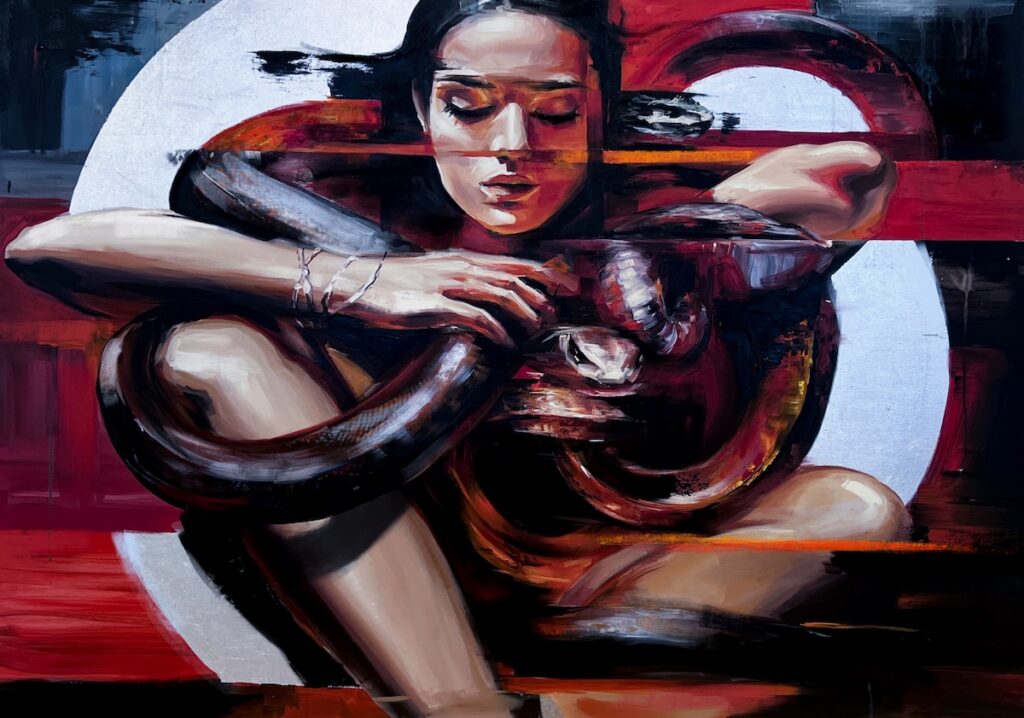
I’m interested in painting as a living practice — not something that waits to be encountered under ideal conditions. When work enters fashion spaces, performances, or social environments, it’s stripped of explanation. The response becomes immediate and instinctive.
Those contexts don’t dilute the work for me; they test it. They force clarity. If a painting can hold its emotional weight there, it can hold it anywhere.
Portraiture remains central to your work. How does it function in high-energy or public settings?
Portraiture carries a very direct line to recognition.
In public or live contexts, people don’t approach the work analytically — they feel it first. They don’t see a “subject”; they encounter a presence. Emotion moves faster than narrative.
Whether the work is shown in a gallery or created live, my intention stays the same: to create an emotional encounter. That’s when portraiture moves beyond decoration and becomes experiential.
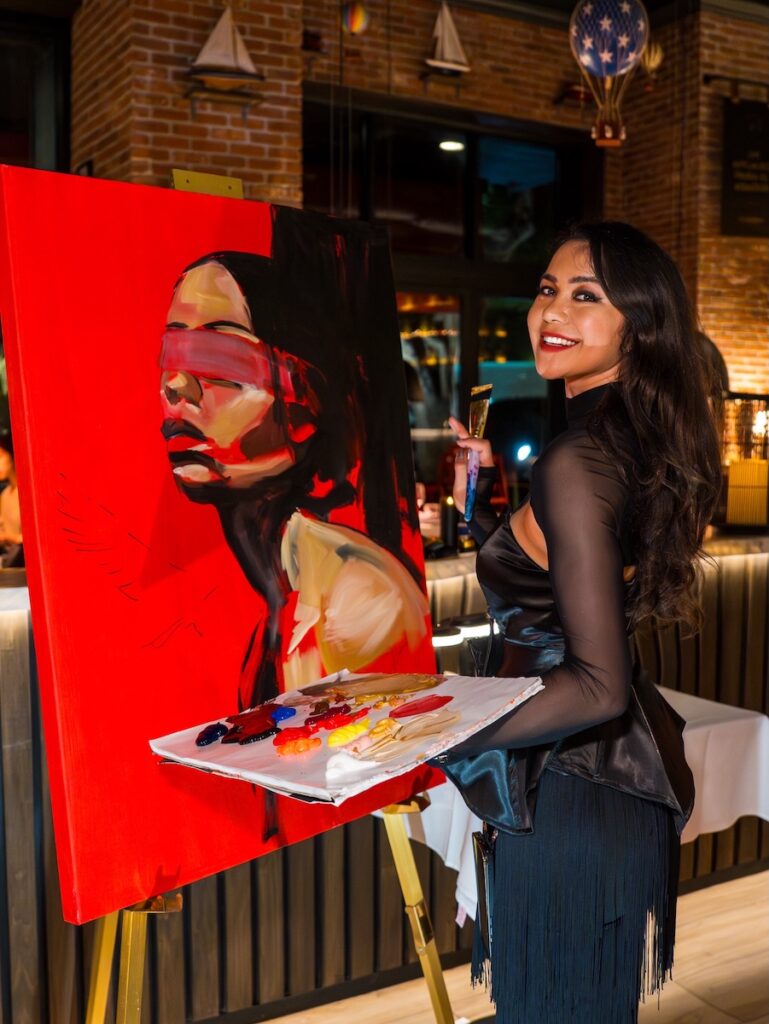
You were also invited to contribute work for the Wild Tomorrow Foundation’s anniversary gala at The Plaza Hotel in New York. How does philanthropy fit into your practice?
Philanthropy enters my practice when responsibility enters the conversation.
As visibility grows, the context in which art appears starts to matter more. Being invited to contribute to Wild Tomorrow Foundation’s 10-year anniversary gala at The Plaza Hotel wasn’t about exposure — it was about alignment. The Foundation is dedicated to protecting threatened and endangered wildlife and restoring habitats in KwaZulu-Natal, South Africa. Conservation, stewardship, and long-term thinking are values I genuinely care about.
During the evening, I painted live on stage, and the artwork along with several of my fashion pieces was auctioned by the end of the night. The event raised over one million dollars to support wildlife conservation efforts.
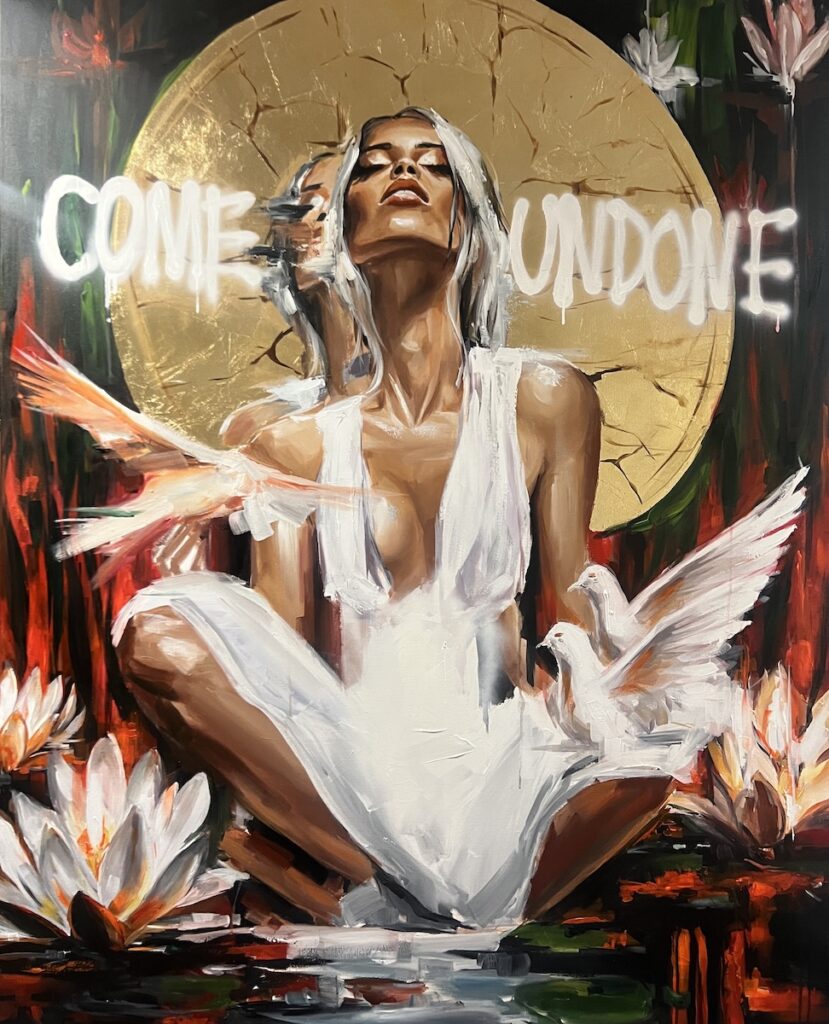
In that setting, art functioned as more than an object. It became a catalyst — a way to translate emotion into action. Moments like that remind me that painting can hold both beauty and responsibility at the same time. I’m interested in visibility that carries consequence, not just attention.
What feels different about this moment in your career compared to earlier years?
I’m no longer asking where I fit. I’m working with more restraint and intention now — choosing contexts, collaborations, and formats that genuinely align with the work and with what I want to say. The recognition, the response in Miami, and the ongoing dialogue across different cities have clarified something important for me: it’s possible to move between worlds without fragmenting your voice.
This moment feels grounded. The momentum is real.
What can we expect next from you?
Right now, my focus is back in the studio. I’m developing new bodies of work that go deeper into portraiture as an emotional and psychological space — allowing the paintings to carry more tension, silence, and unresolved feeling.
I’m thinking carefully about how and where these works are introduced. Some pieces ask for time, for context, for a certain kind of attention. I’m interested in exhibitions and moments that allow the work to breathe — where the paintings aren’t just seen, but actually encountered.
For me, visibility only matters if it’s earned through depth. I want the work to participate in culture, not skim across it — to stay human, complex, and honest, even as it moves into larger conversations.
“I’m not interested in chasing visibility. I’m interested in building presence — and letting the work hold its ground.”
— Margarita Howis

Follow Margarita Howis on Instagram @margarita.howis | Website: ritahowis.com