

Cannes does not do casual. It does protocol with a camera flash, and the 2026 opening night made that very clear. The 79th Festival de Cannes officially opened on May 12, launching twelve days of cinema, jewelry, sharp tailoring, and the kind of red-carpet choreography that can make even a restrained dress feel dramatic.
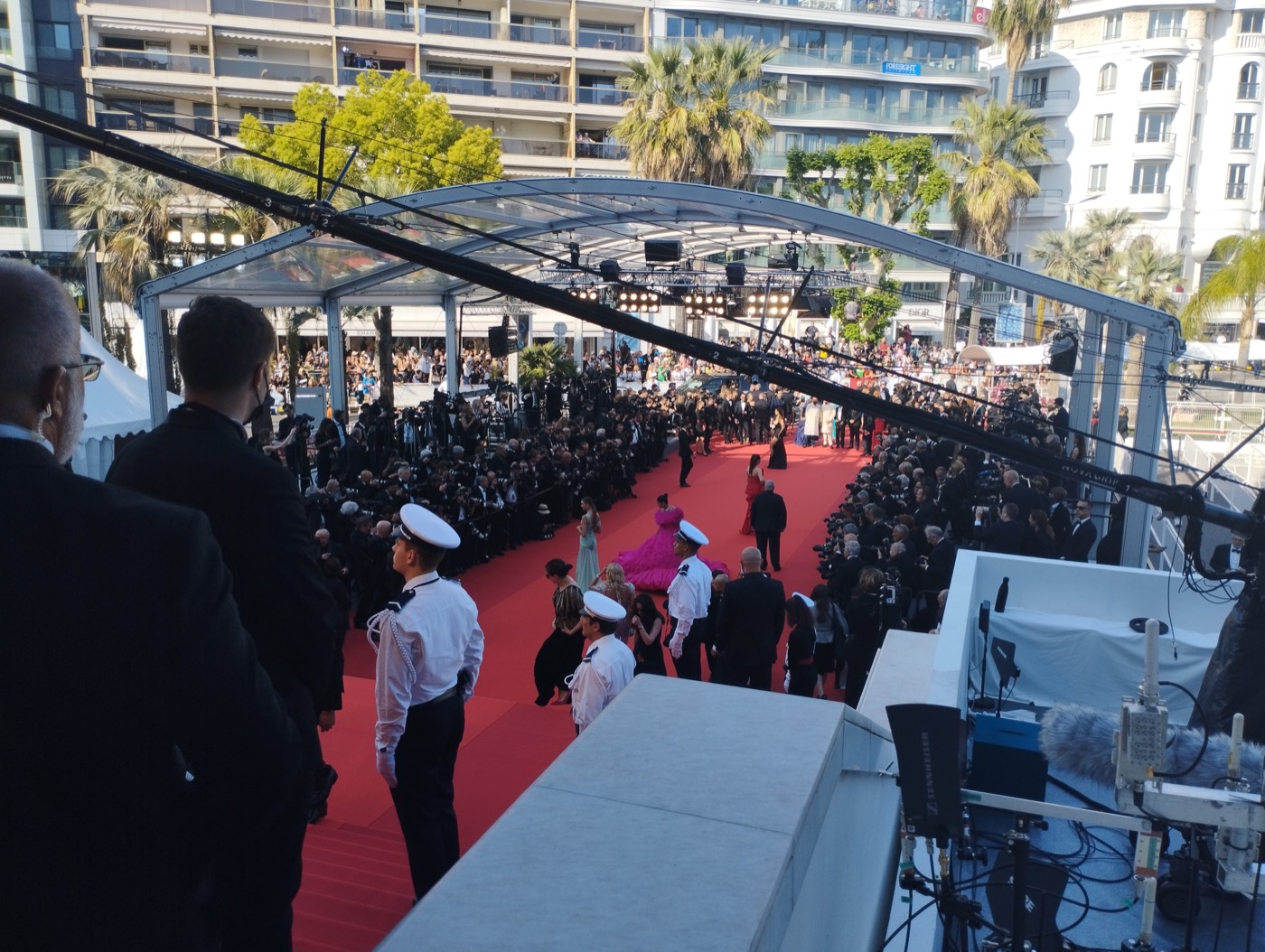
The useful tension this year is the dress code. Cannes has never been the most relaxed carpet in the world, but its latest rules make the mood more pointed: nudity is off the table, oversize trains and looks that slow down the stairs are discouraged, and gala screenings still ask for formal eveningwear. In plain fashion language, the festival is asking stars to be glamorous without turning the entrance into a traffic problem.
The red carpet got stricter, not quieter
That could have killed the fun. Instead, opening night proved the opposite. When the shock factor gets edited out, the stronger looks have to win through construction, texture, and control. The best Cannes fashion has always understood this: a dress has to read from the bottom of the steps, survive a wall of flash, and still look intentional once the guest is seated inside the Grand Theatre Lumiere.
Demi Moore understood the assignment early. Serving on this year’s jury, she arrived as one of the night’s clearest fashion stories in a shimmering Jacquemus look that felt polished rather than desperate for attention. It had the classic Cannes ingredients — shine, structure, jewelry, and a silhouette made for photographers — but the smarter part was the restraint. Nothing about it needed to shout.
That restraint mattered because the opening ceremony itself carried real cinematic weight. According to the Festival de Cannes, Eye Haidara presided over the evening at the Grand Theatre Lumiere, introducing the jury led by Park Chan-wook. The jury lineup includes Moore, Ruth Negga, Laura Wandel, Chloe Zhao, Diego Cespedes, Isaach De Bankole, Paul Laverty, and Stellan Skarsgard. Peter Jackson also received a major tribute, before Gong Li and Jane Fonda helped declare the festival open.
Why Cannes still owns the formal-fashion lane
The opening film, Pierre Salvadori’s La Venus electrique, gave the night its official cinema frame, but the red carpet told its own story. Cannes is not the Met Gala, where fantasy can swallow the person wearing it. Cannes is more ruthless. The clothes have to flatter, move, comply, photograph, and still look expensive under the most unforgiving lights in Europe.
That is why the new rules may end up helping the carpet more than hurting it. If nudity and impossible volume are no longer easy shortcuts, stylists have to work harder. Fabric becomes the headline. A neckline has to carry the drama. Jewelry has to sharpen the image rather than bury it. The strongest opening-night looks were not necessarily the loudest; they were the ones that looked edited.
For readers tracking the fashion, the better reference point is not outrage but calibration. Vogue’s Cannes 2026 red-carpet gallery already shows the direction: old-school glamour, high-shine surfaces, French-house precision, and celebrities trying to find personality inside a narrower set of rules.
That is the real opening-night takeaway. Cannes 2026 is not asking fashion to behave. It is asking fashion to be more exact. The carpet still wants sparkle, ego, and a little danger, but this year the drama has to be disciplined. For a festival built on control, myth, and image-making, that might be the most Cannes rule of all.