
AI ate the data centers, starved your laptop of memory chips, and made it all irrelevant anyway. Welcome to the token economy — where your old MacBook works fine, but the island that powers it is the most contested real estate on earth.
Editor’s note: The individuals quoted in this article are fictional composites — representative characters drawn from interviews, industry surveys, and publicly reported trends across the technology sector. They are not real people. All data, statistics, and institutional sources cited are real and independently verifiable.
It’s upgrade season in corporate America. Thus, enter the CIO’s existential crisis. Thus, enter the CFO’s confused spreadsheet. Thus, enter the 2021 MacBook Pro running Claude Code and shipping production software faster than a team of ten could have managed eighteen months ago — the ultimate quiet flex in a world that spent two decades telling you faster chips meant better work. (Yes, really.)
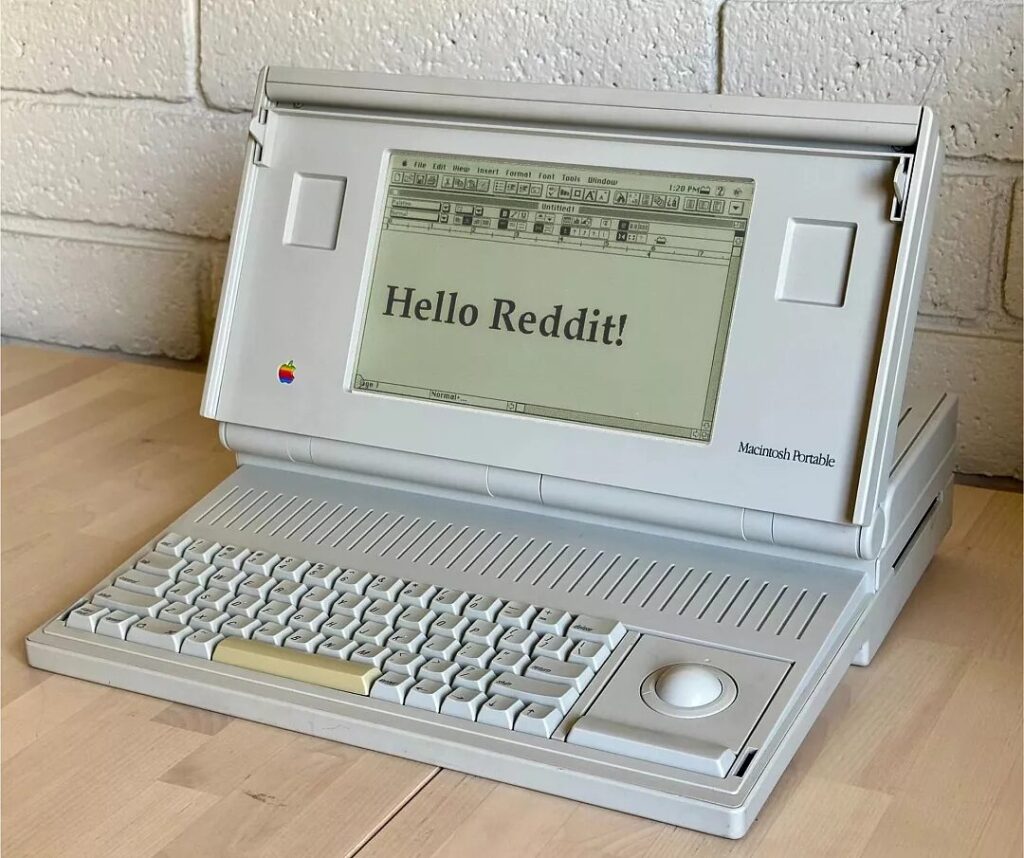
Global PC shipments are set to plummet 11.3% in 2026, the steepest annual contraction in over a decade. CPU sales on Amazon tanked 51% year-over-year in January. Memory prices have doubled in a single quarter. And yet — here’s the part nobody in the hardware business wants to say out loud — most knowledge workers don’t notice. Their five-year-old laptops work just fine, because the revolution isn’t happening inside the machine anymore. It’s happening inside the cloud.
The compute that matters — the intelligence, the reasoning, the code generation — runs on Anthropic’s servers. On OpenAI’s servers. On Google’s TPU clusters. Your laptop is just a window into the factory. And the factory charges by the token.
The Developer Who Stopped Upgrading
Call him Marcus. He’s a composite — a fictional stand-in for the thousands of mid-career engineers we’ve heard from in industry surveys, developer forums, and conference hallways. He’s 34, a senior full-stack engineer at a mid-stage fintech startup, and he hasn’t bought a new computer since 2021. He doesn’t plan to.
“I used to upgrade every two years, religiously,” Marcus says. His current machine is a MacBook Pro with an M1 chip. “Now I run agentic coding tools that do the heavy lifting on someone else’s silicon. My local CPU barely breaks a sweat. Why would I spend three grand on a new machine to render the same chat interface?”
Marcus represents the 84% of developers now using AI tools, per the Stack Overflow 2025 Developer Survey. He represents the 51% using them daily. He represents the cohort that, according to DX’s Q4 2025 analytics across 4.2 million developers, now sees 26.9% of their production code authored by AI — up from 22% just last quarter.
Then there’s the composite we’ll call David — the engineering VP at a Fortune 500 company who just killed a multi-million-dollar desktop refresh. “The ROI math broke,” David says, echoing a sentiment that Deloitte’s 2025 US Tech Value survey captured precisely: AI is now the fastest-growing expense in corporate technology budgets, with some firms reporting it consumes up to half of their IT spend. “New desktops would give us twelve percent faster compile times. Tokens gave us twelve times faster shipping.”
The Numbers Don’t Lie — They Scream
The math here is genuinely wild. Token costs for frontier language models have crashed 99.7% in three years — from $30 per million tokens for GPT-4 in early 2023 to fractions of a cent today. The AI API price wars of March 2026 saw OpenAI slash GPT-4 pricing by 60%, Anthropic cut Claude by 50%, and Google make Gemini nearly free for developers. And yet — here comes the Jevons Paradox, dressed in a hoodie and carrying a MacBook — total enterprise inference spending grew 320% over the same period, per AInvest’s analysis of what Andreessen Horowitz calls “LLMflation.”
Make something cheaper, people use catastrophically more of it. Sound familiar? It should. It’s the exact same pattern as cloud computing in 2012, ride-sharing in 2015, and streaming in 2018.
Meanwhile, on the hardware side, the picture is gruesome. Gartner projects a 130% surge in combined DRAM and SSD prices by end of 2026. Memory now accounts for 23% of a PC’s total bill of materials, up from 16% last year. HP’s CEO told investors that memory costs doubled in a single quarter and now represent 35% of PC build materials. IDC says the sub-$500 laptop will effectively cease to exist by 2028. Samsung, SK Hynix, and Micron redirected up to 80% of their manufacturing capacity toward HBM chips for AI data centers — starving consumer PCs of the very components they need to get cheaper.
Our composite semiconductor analyst — call her Rachel, an amalgam of voices from Bernstein, Gartner, and IDC — puts it bluntly: “The AI boom is literally cannibalizing the hardware market that created it. Data centers are eating the memory supply chain. Consumers get the scraps. And the irony is, they don’t care, because they don’t need the hardware anymore.”
The Great IT Spending Migration
What’s happening here is nothing less than a structural repricing of scarcity in the global economy. Goldman Sachs published a February 2026 report documenting a 35% outperformance of capital-intensive stocks over capital-light stocks since January 2025 — dubbing it the “HALO trade”: Heavy Assets, Low Obsolescence. In the AI economy, physical things are scarce and appreciating. Software is abundant and depreciating.
Think about what that means. For two decades, the tech gospel was that software would eat the world. Now software is being written by software. Onboarding time for new engineers has been cut in half. A single developer armed with AI agents can ship what used to require a team. Daily AI users merge roughly 60% more pull requests than light users. (Gasp!)
The downstream effects are staggering. If one developer can do the work of ten, the software vendor loses nine seats of revenue. If hardware upgrades are unnecessary, the PC OEM loses a refresh cycle. If the cloud AI provider charges by the token instead of the server rack, the entire CapEx model of corporate IT flips to OpEx overnight.
Our composite CTO — call him James, representative of the healthcare, insurance, and government IT leaders whose budgets are being rewritten in real time — describes the shift: “Three years ago, 60% of my budget went to hardware and licensing. Now it’s closer to 35%. The rest is going to API consumption and prompt engineering talent.” He reflects what Deloitte found: cloud computing bills rose 19% in 2025 as generative AI became central to operations, yet nearly half of leaders expect it will take three years to see ROI.
Not Everyone Is Buying the Revolution
Not everyone is convinced the old hardware model is truly dead. A rigorous randomized controlled trial by METR found that experienced open-source developers using early-2025 AI tools actually took 19% longer to complete tasks than without AI. The developers themselves estimated they were 20% faster. They were wrong.
Our composite academic skeptic — call her Dr. Torres, standing in for the researchers at METR, Carnegie Mellon, and MIT who have studied these workflows — frames it this way: “The productivity narrative has outrun the evidence. The reported gains are real for certain tasks — boilerplate code, documentation, test generation. But for complex systems architecture, the AI generates plausible-looking garbage that senior engineers spend hours debugging.”
The data backs her up — partially. AI-coauthored pull requests show roughly 1.7 times more issues than human-only code. Only 24% of developers trust AI output “a lot,” per the DORA 2025 report. And delivery stability — the thing that actually keeps production systems running — declined 7.2% in organizations using AI tools. It’s the same pattern playing out in autonomous vehicles, where more safety features paradoxically introduce higher systemic risk — the more we trust the machine, the less we verify its output. Even METR’s February 2026 update acknowledged that recruiting developers willing to work without AI has become nearly impossible — an increasing share simply refuse to do 50% of their work without it, even for $50 an hour.
The Island That Runs the Cloud
Here’s where the story stops being about laptops and starts being about warships.
Everything described above — the token economy, the death of the hardware upgrade, the shift from local compute to rented cloud intelligence — rests on a physical foundation that most people never think about. That foundation is a 14,000-square-mile island 100 miles off the coast of China. Taiwan fabricates nearly one-third of global demand for new computing power. TSMC alone holds an upper-90% market share on the advanced AI chips that power every major cloud provider. One analyst told CNBC the global economy would face a “depression-level event if Taiwan were invaded tomorrow.”
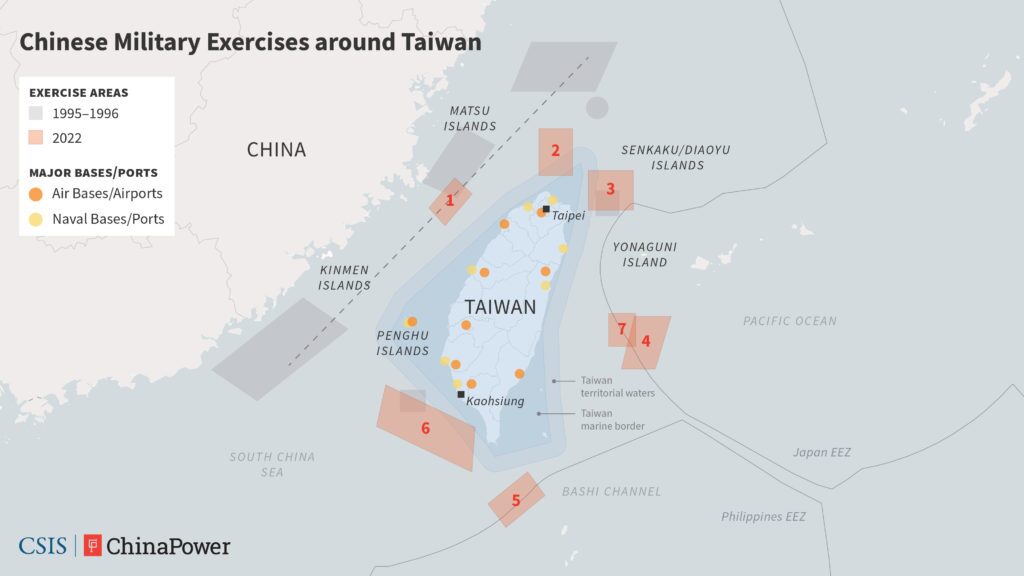
The token economy didn’t eliminate hardware dependency. It concentrated it. Your old MacBook works fine precisely because the hard work moved to data centers — data centers running on TSMC’s 2nm and 3nm chips, which are so in demand that Broadcom’s executives said capacity has “choked the supply chain in 2026.” TSMC’s Arizona fabs just started producing 4nm chips. Taiwan is running 2nm. That four-to-five-year lag ensures Taiwan remains the irreplaceable node in the AI supply chain for the rest of this decade.
And it gets worse. The memory chips that your laptop can’t afford anymore? The HBM that AI data centers are hoarding? Samsung and SK Hynix make those — in South Korea, which sits under the same Chinese military umbrella as Taiwan. The entire AI compute stack — logic chips and memory — is manufactured within range of Chinese military power. A Taiwan Strait crisis doesn’t stay in the Taiwan Strait. It becomes a Korean Peninsula crisis. It becomes a global AI infrastructure crisis. It becomes the moment your five-year-old MacBook’s token connection goes dark.
The Closing Window and the Opening Window
Two competing timelines are now racing each other, and the outcome will determine whether the next decade is defined by cold war or hot war.
Timeline one: China is sprinting toward chip self-sufficiency. Huawei unveiled a three-year AI chip roadmap — the Ascend 950 in early 2026, the 960 by late 2027, the 970 by 2028 — with Huawei-designed high-bandwidth memory to boot. SMIC is doubling capacity on its most advanced 7nm lines. Huawei plans to produce roughly 750,000 Ascend units in 2026, with ByteDance and Alibaba reportedly lining up orders after successful testing. Chinese regulators have mandated that domestic data centers source over 50% of their chips domestically. The “whole nation” approach to semiconductor independence is producing real silicon, not just press releases.
Our composite geopolitical analyst — call her Lin, an amalgam of voices across defense think tanks and semiconductor research firms — calls this “the closing window.” “Every quarter that Huawei ships functional Ascend chips, Taiwan’s value as a prize diminishes for Beijing,” she says. “If China reaches chip self-sufficiency, the incentive to seize TSMC’s fabs decreases. That’s the optimistic scenario.”
But there’s a darker timeline running in parallel. Call it “the opening window.” If AI is the decisive military advantage of the 21st century — and the Pentagon’s own January 2026 AI Strategy certainly treats it that way — then seizing or blockading Taiwan doesn’t just give China chips. It denies them to the United States. A naval blockade alone — no boots on the ground, no urban warfare in Taipei — could starve American data centers of next-generation silicon within 12 to 18 months. The NDAA authorized $8 billion in defense spending with heavy AI emphasis, but the chips those AI systems run on are made in the one place China is most likely to contest.
Our composite defense planner — call him Col. Reeves, representing the voices at RAND, CSIS, and inside the Pentagon’s own CDAO who are gaming these scenarios — puts it in stark terms: “We built the most sophisticated AI-enabled military in history. Then we put the entire supply chain for the hardware it runs on within cruise missile range of our primary adversary. That’s not a strategy. That’s a vulnerability.”
The Sovereignty Trap
Stack the layers. The US military is building its AI strategy around commercially licensed software from private companies — Palantir’s Maven Smart System, which the Army uses to analyze satellite and drone footage, is licensed, not owned. The Brennan Center warned that this “disincentivizes the military from developing the technical infrastructure and know-how to conduct key aspects of intelligence analysis.” Uncle Sam is renting his own war-fighting brain.
Meanwhile, the GSA removed Anthropic from federal procurement on a presidential order in February 2026. In a year that is already shaping up to be the most aggressive political battleground in recent memory, the government has demonstrated it will cut off AI providers on political grounds overnight — while simultaneously depending on AI providers for mission-critical defense operations. It’s building a military AI empire on rented software, manufactured on contested silicon, paid for in tokens from companies it might ban tomorrow.
Three single points of failure. Stacked on top of each other. Like a Jenga tower balanced on the deck of an aircraft carrier in the Taiwan Strait.
The Countdown Timer Nobody Requested
Follow the thread far enough and you end up with an accidental geopolitical countdown timer. Every month, two things happen simultaneously. The US builds more domestic chip capacity — CHIPS Act fabs, TSMC Arizona, Intel’s foundry resurrection. And China builds more domestic AI chip capacity — Huawei Ascend, SMIC 7nm, three new fabrication plants coming online this year. Both sides are racing to eliminate their dependency on the Taiwan chokepoint.
The question is who gets there first — and whether whoever is losing that race decides to act before the window closes entirely.
The San Francisco Fed is comparing the current moment to electrification — when factories bought generators but didn’t redesign their production lines for twenty years. The European Central Bank is citing the “Productivity J-Curve” to explain why all this AI spending hasn’t shown up in GDP numbers. But the better historical analogy might be the 1930s — when two rival industrial systems raced to build capacity while the geography between them grew increasingly militarized.
We’re building a civilization that runs on tokens processed by three cloud providers, written by AI models trained on the internet’s entire corpus, manufactured on chips from a contested island, stored in memory from a peninsula under nuclear threat, consumed through laptops that haven’t been upgraded since the Biden administration. The hardware is a shell. The intelligence is rented. The supply chain is a geopolitical tinderbox. And the bill arrives monthly, per million tokens, from a company that didn’t exist a decade ago.
Your five-year-old MacBook has never been more powerful. It’s also never been more fragile. The question isn’t whether you need a new laptop. The question is whether the global order that makes your old one work can survive the decade.