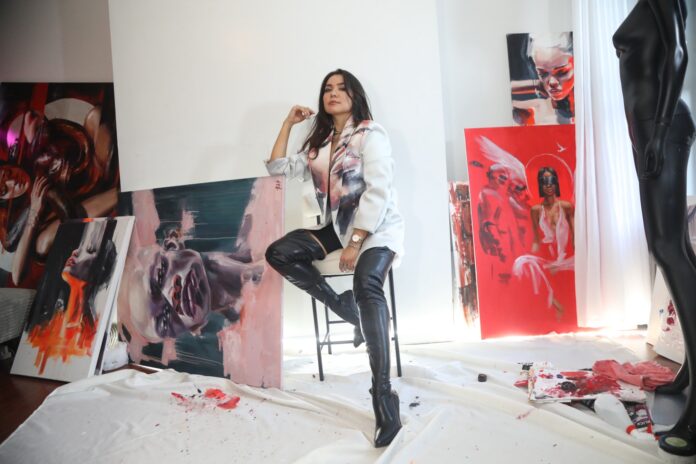
Margarita Howis is treating fashion less like a detour from painting and more like a new surface for it. The New York and Copenhagen based contemporary portrait artist has been moving her visual language onto bodies, objects, and live luxury moments, most visibly through Eden Metamorphosis, the Bikini Beach project presented during Espacio Vogue Miami: Runway Edition, and through a Valentino Beauty collaboration at Macy’s Flower Show in Herald Square.
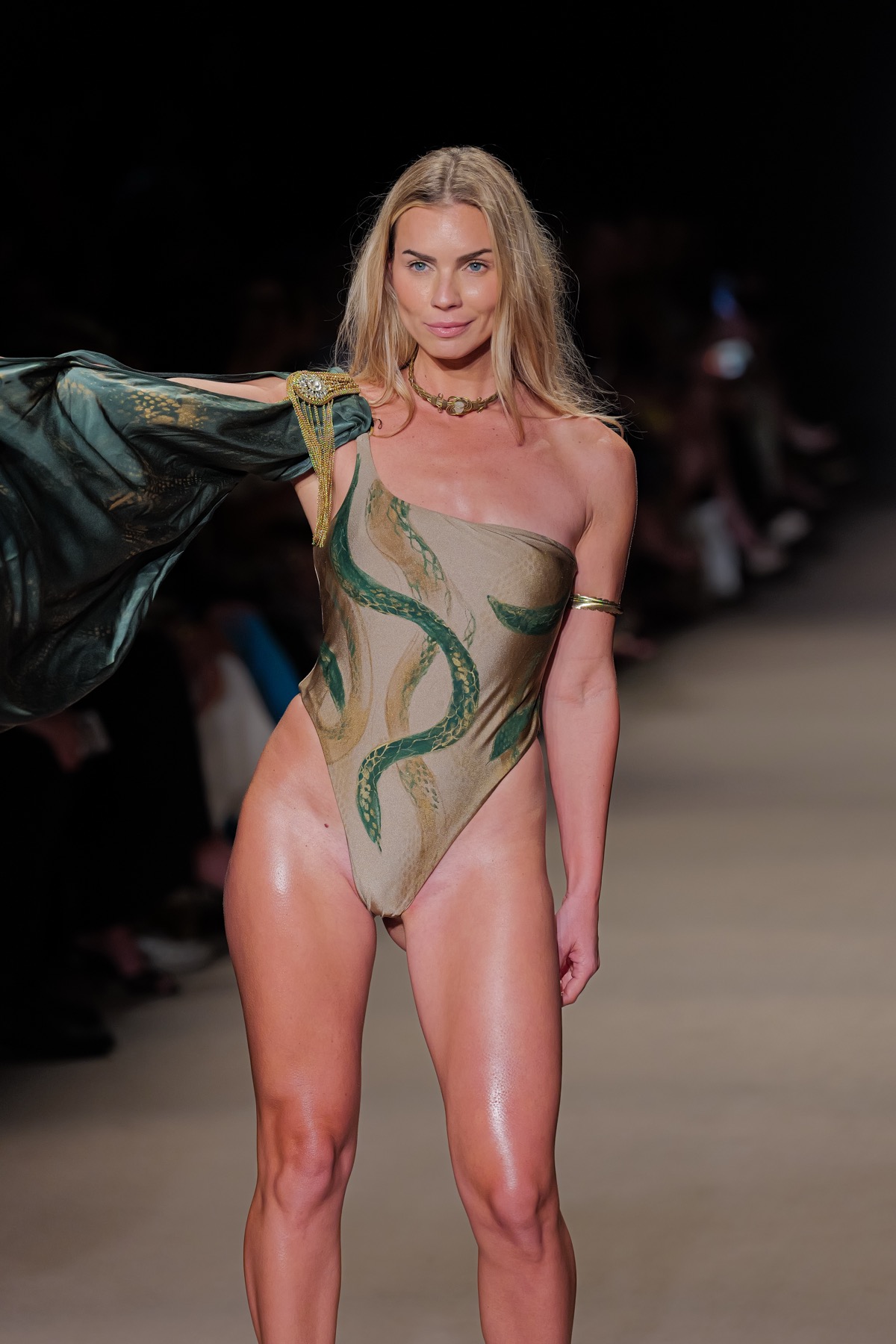
The throughline is not simply collaboration. It is translation. Howis is known for portrait work that circles identity, transformation, vulnerability, and strength. In Eden Metamorphosis, that emotional vocabulary moved from canvas to swimwear, where butterflies, serpents, botanical symbols, painterly textures, and hand-worked brushstrokes became part of the garment itself.
Vogue Mexico’s coverage of Bikini Beach at Espacio Vogue Miami described the Australian label’s Miami runway moment as a fantasy-rich beachwear presentation, with Eden Metamorphosis centered on transformation, movement, and a more emotional idea of resort luxury. Howis’ role gave that story a literal painter’s hand.
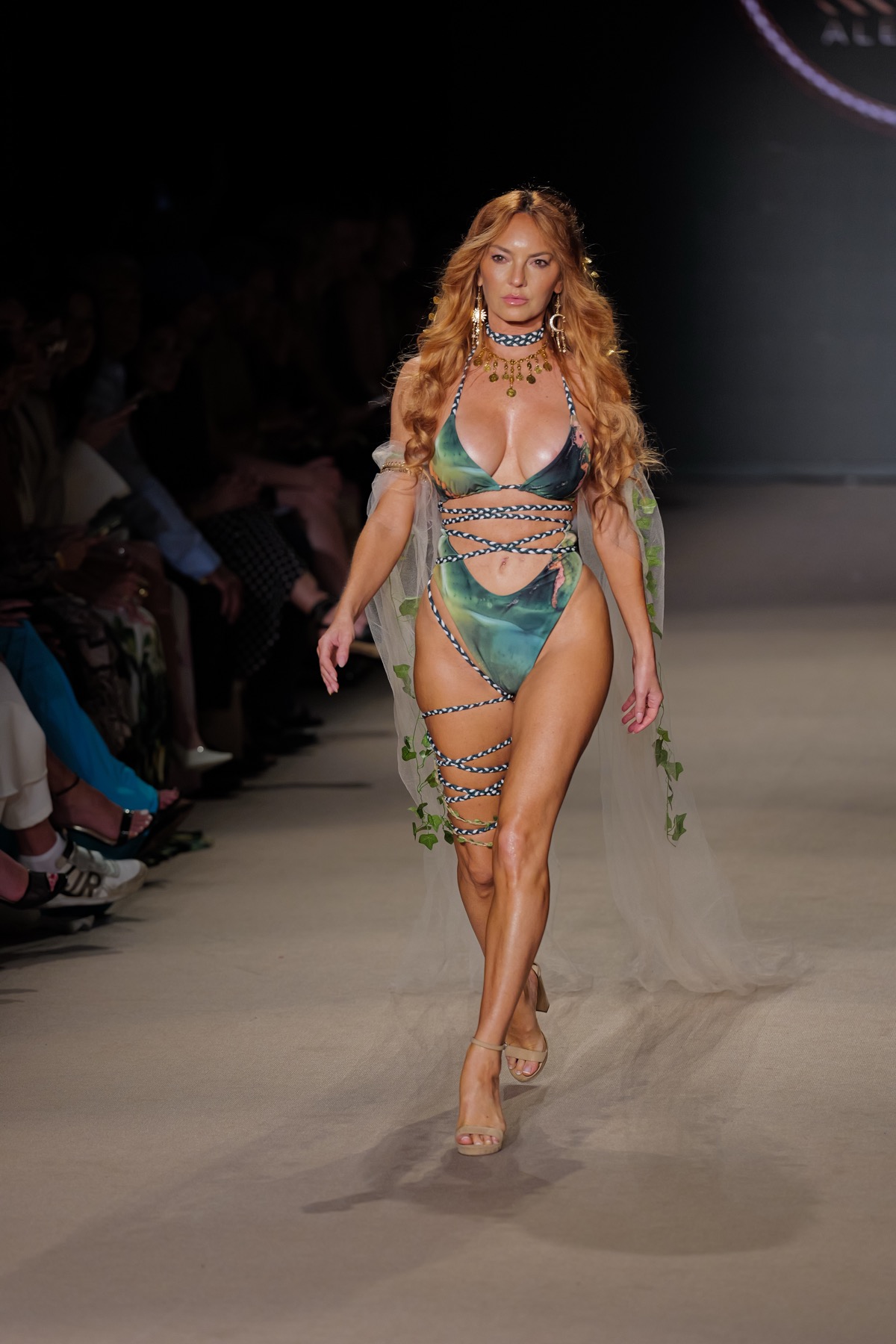
Working with Bikini Beach founder and creative director Alexandra, Howis helped turn original paintings into custom textile prints. Several runway pieces were also hand-painted, giving the collection the feeling of a living canvas rather than a straightforward swimwear lineup. The result sat somewhere between resortwear, performance, and gallery installation: the clothes were still desirable, but they carried the trace of the studio.
“One of the biggest creative challenges was translating the emotional language of painting into something that lives on the body,” Howis says. “Fashion allowed us to tell the story in motion. Suddenly the painting wasn’t standing still anymore-it was walking, breathing and interacting with people.”
That idea fits the Miami fashion moment right now. Gossip Stone has been following the way runway culture in the city keeps expanding beyond the traditional show format, from Florida Men’s Fashion Week’s mix of menswear, art, and culture to the more theatrical beachwear energy around Miami Swim Week’s performance-driven showcases. Howis’ work lands in that same conversation, but with a quieter center: the handmade mark.
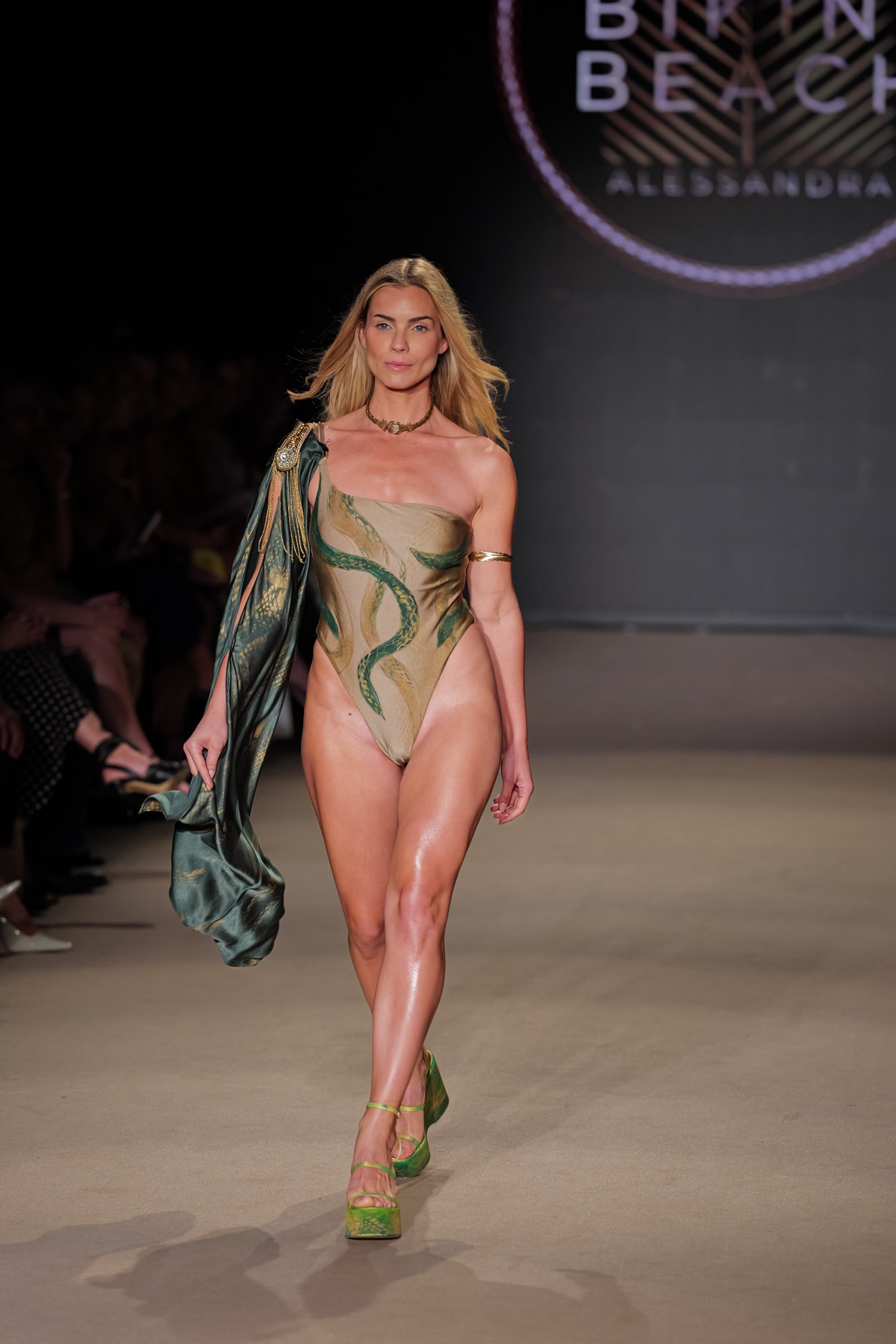
The imagery of Eden Metamorphosis is intentionally symbolic. Butterflies suggest rebirth, serpents suggest shedding and renewal, and botanical forms soften the swimwear with a mythic, almost ritual quality. On the runway, those references read clearly without becoming costume. The best looks had the sensuality of beachwear, but also the discipline of a painting edited down to its strongest marks.
Howis’ Valentino Beauty collaboration pushed the same premise into a different environment. During the Macy’s Flower Show at Herald Square in New York, she was selected as a featured artist for a Valentino Beauty activation, where she created more than 500 individually hand-painted Valentino Beauty pieces live for visitors.
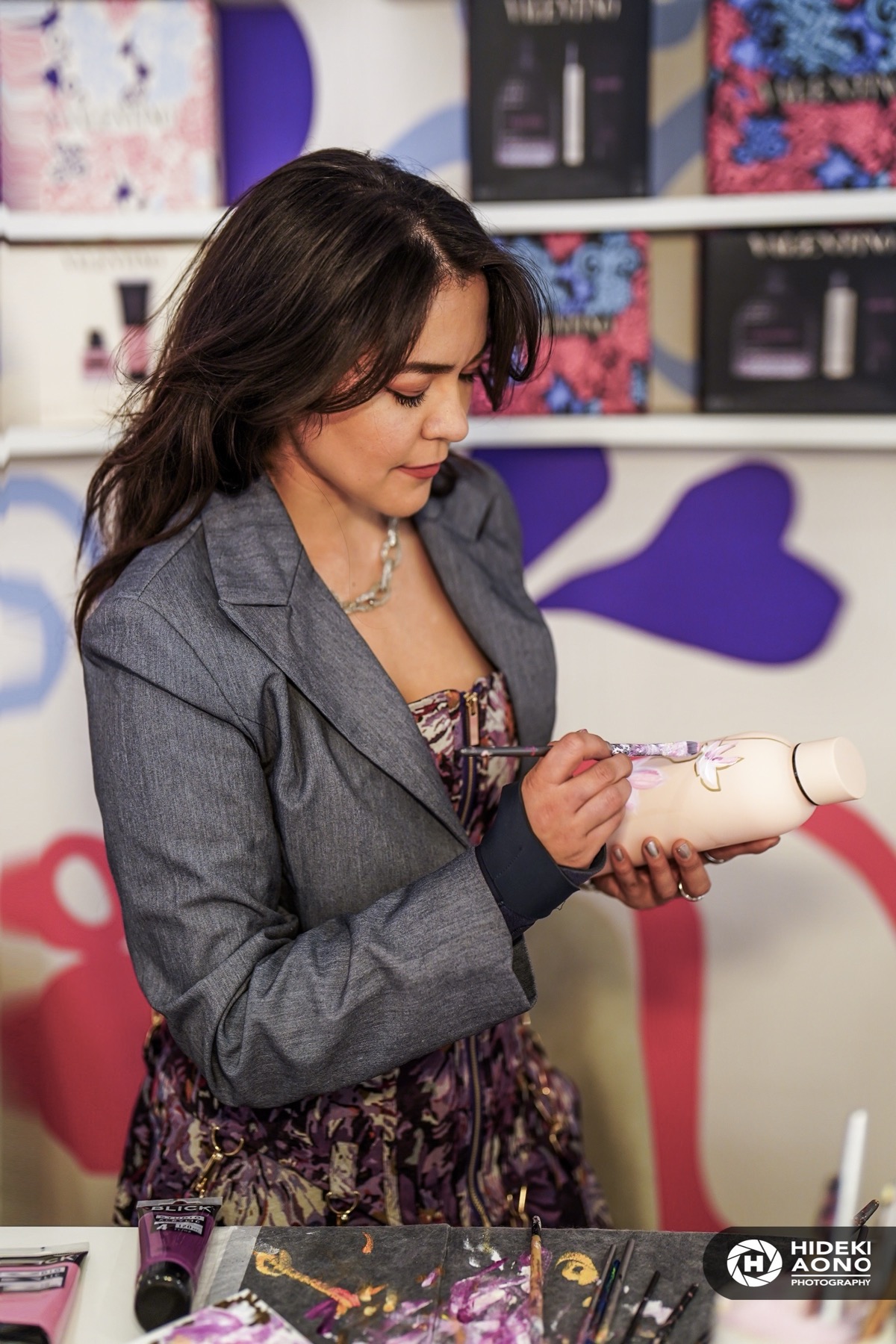
That setting demanded another kind of intimacy. A runway lets art move at a distance; a live beauty activation puts the artist inches from the audience. Each object became a small collectible, but also a public performance of craft. For a luxury house, the value was not only in customization. It was in slowing the room down long enough for people to watch a hand make something personal.
“Whether I’m creating a portrait, developing prints for a runway collection, or painting luxury objects live, I’m always asking the same question,” Howis says. “How can art create a genuine emotional connection? The surface changes, but the intention never does.”
That consistency is why the two projects feel connected rather than opportunistic. Eden Metamorphosis gave Howis’ paintings movement; Valentino Beauty gave them scale through repetition, touch, and live encounter. Together, they show an artist testing how contemporary portraiture can leave the wall without losing its emotional charge.
They also point to a broader shift in luxury and fashion. Brands are not only borrowing art for atmosphere; the strongest collaborations now ask artists to shape the actual experience, from textile to object to audience memory. In Miami, that conversation has been visible across runway culture, including Sunny Isles Beach Fashion Week’s art-and-fashion programming. Howis is part of the same movement, but her language remains unmistakably painterly.
For Gossip Stone, the most interesting part is not that painting entered fashion. It is that Howis made the exchange feel alive. The canvas changed. The emotional question stayed the same.