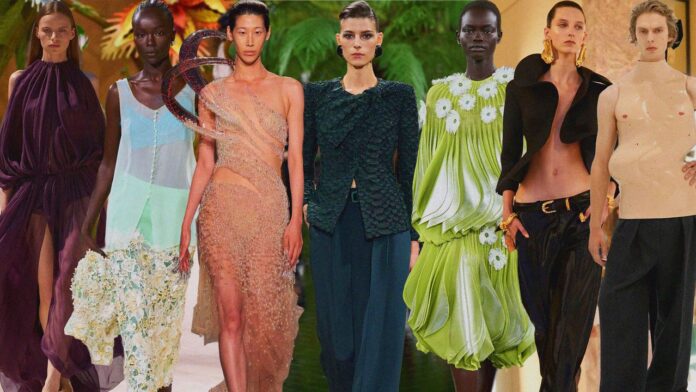
Paris couture did not spend July trying to look quiet. The Fall 2026 season, staged on the official Haute Couture Week calendar from July 6 to 9, gave fashion a sharper message than another round of pretty dresses: the runway is most interesting when it lets craft, fantasy, and the body argue with each other.
That sounds lofty, but the takeaway is practical. The strongest looks this season were not just expensive. They were specific. Corsets came back with tension. Draped gowns looked less like nostalgia and more like movement. Feathered surfaces, sculptural shells, glossy finishes, and exaggerated proportions made the runway feel alive again, especially after several seasons when “wearable” sometimes became a polite word for forgettable.
Vogue’s Fall 2026 couture trend report framed the season around corsets, weightlessness, creature comforts, body questions, and theatrical volume. Read together, those ideas explain why couture still matters even for people who will never order a made-to-measure gown. Couture is where fashion tests shape before the rest of the industry translates it into red carpets, editorials, eveningwear, beauty campaigns, and eventually the way mainstream style talks about bodies.
The return of the body, but not the old body-con story
The most interesting body-conscious fashion right now is not just tight. It is engineered. At Fall 2026 couture, the body appeared through molded construction, corsetry, sheer layers, cutouts, weightless draping, and clothes that looked as if they had been negotiated directly on the model. That is a different energy from the early-2000s version of body-con, which often relied on exposure alone.
This season’s body story felt more complicated. It asked whether structure can look protective, whether transparency can feel elegant, and whether a dress can be both sculptural and emotionally readable. That is why couture’s “strange” moments matter. They train the eye. By the time a celebrity wears one of these ideas on a premiere carpet, the runway has already done the difficult work of making the silhouette legible.
Gossip Stone has been tracking that same shift in how fashion crosses into culture, from Margarita Howis’s art-and-fashion projects to the way Jennifer Lopez turned Wimbledon dressing into a style conversation. The runway does not stay on the runway for long. It travels into celebrity images, beauty references, luxury collaborations, and the small styling choices that people copy without always knowing where they started.
Why draping suddenly feels fresh again
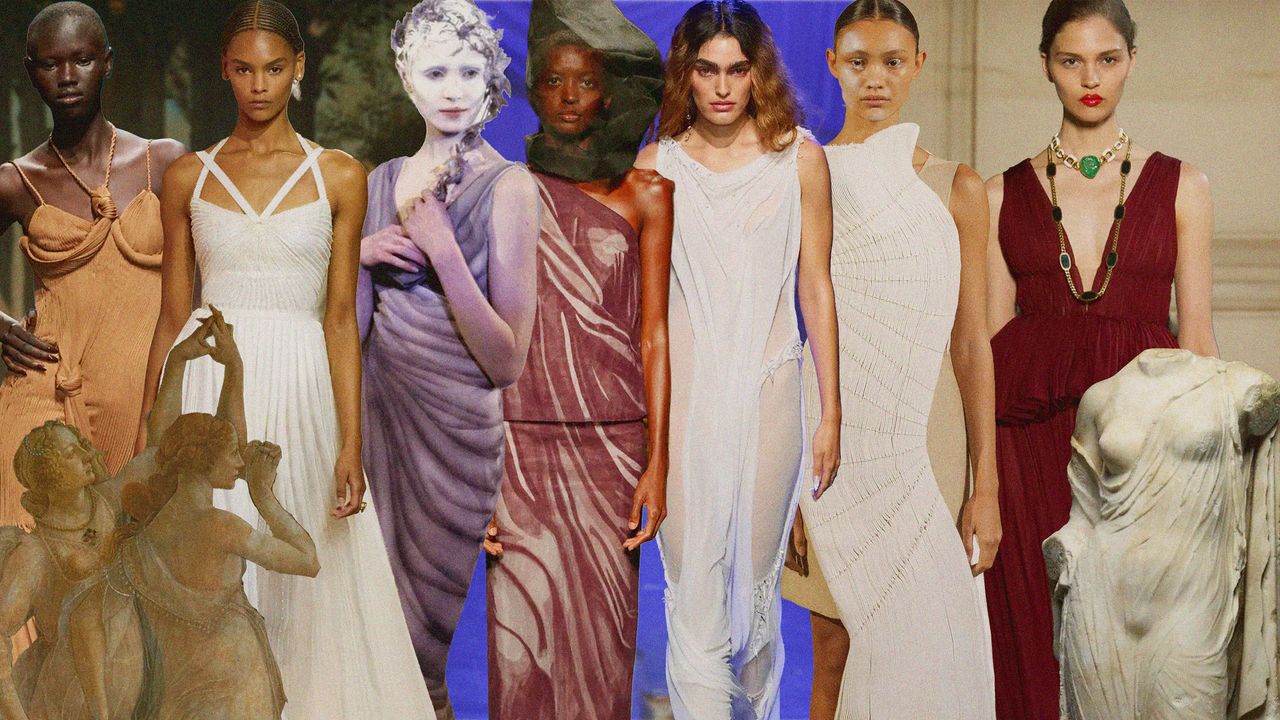
One of the week’s quieter signals was the return of drape as a serious fashion language. On the same day, Vogue revisited how The Odyssey has shaped fashion’s archive, tracing a long line of pleating, wrapping, twisting, and Grecian ease. That reference point matters because draping is not decoration. It changes posture. It suggests motion even when the model is standing still.
For 2026, that kind of softness feels newly relevant. After seasons of heavy branding and aggressively recognizable pieces, draped fashion offers a different kind of status: the ability to look effortless while still requiring intense technical control. A loose fold can be as deliberate as a corset bone. A floating panel can say as much as a logo.
The useful weirdness of couture
The most photographed couture looks are often the least “practical,” but that is exactly why they work. A jelly-like surface, a surreal gown, a theatrical sleeve, or an exaggerated skirt gives fashion a visual problem to solve. From there, the idea gets refined. A runway experiment becomes a red-carpet moment. A red-carpet moment becomes a trend report. A trend report becomes a neckline, a fabric finish, a beauty look, or a shopping mood six months later.
Who What Wear’s couture roundup pointed to the same bigger story: Schiaparelli, Dior, Chanel, Balenciaga, Jean Paul Gaultier, and Robert Wun all used the week to test how much fantasy the current fashion audience still wants. The answer seems clear. People want the dream, but they want it with a point of view.
That is the reason Fall 2026 couture has staying power beyond the front row. It did not simply sell luxury. It showed the hand, the risk, the oddity, and the patience behind luxury. In a fashion cycle that moves too fast, that human evidence may be the most valuable trend of all.